
Reading at Advanced level
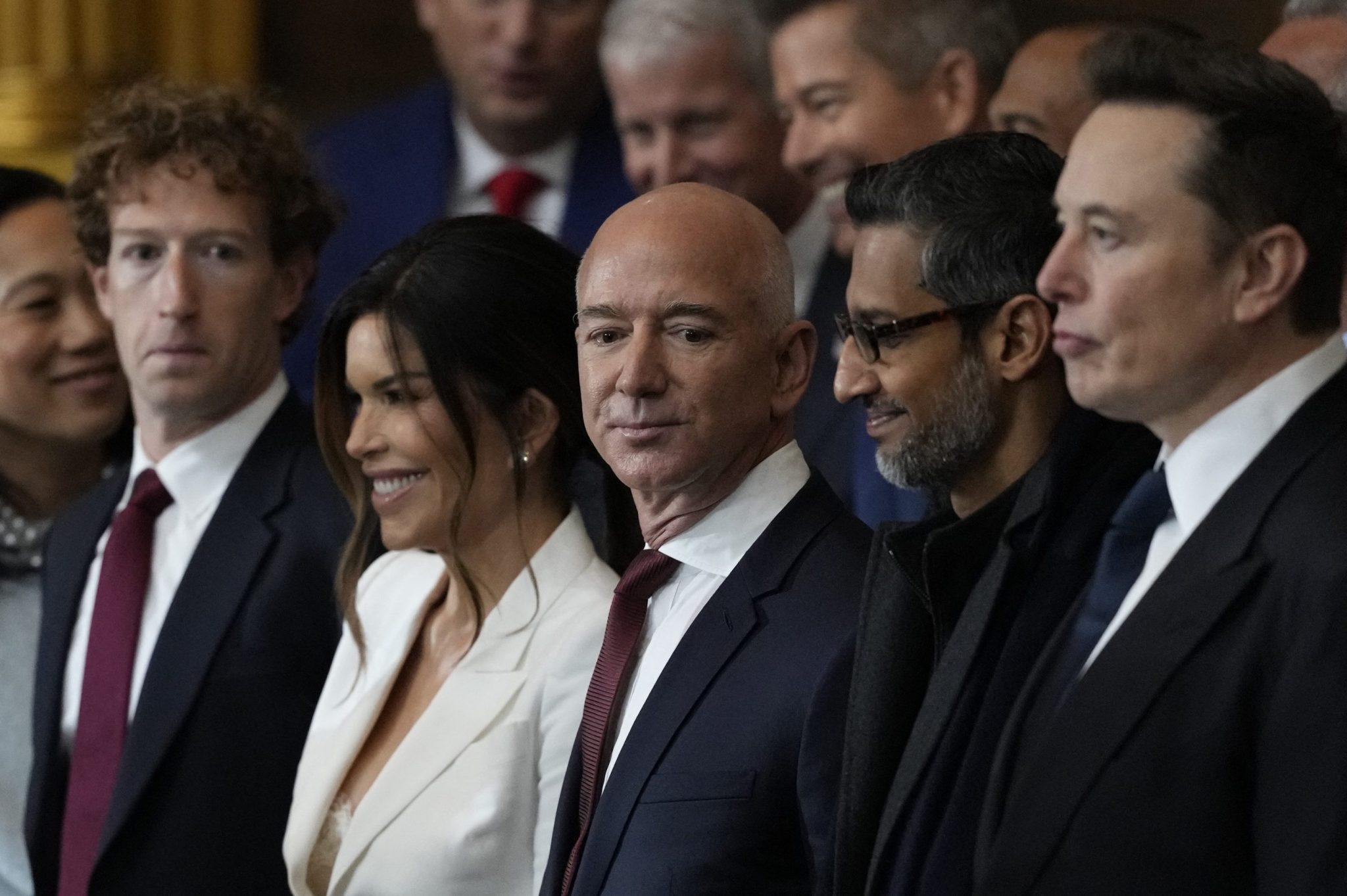
The global billionaire cohort, numbering fewer than 3,800 (0.00005% of global population), holds a record $15.1 trillion in aggregate wealth—equivalent to nearly half U.S. GDP at $32.5 trillion and 30% of combined G7 nominal GDP at $52.06 trillion. According to Altrata's 2026 Billionaire Census, the billionaire population expanded 8.2% in 2025, marking the fastest growth in five years, though wealth gains have become increasingly concentrated. The 29 superbillionaires—those exceeding $50 billion in net worth—now command $4.1 trillion, representing 27.2% of all billionaire wealth, versus 7.2% held by just 10 superbillionaires in 2017. This acceleration is recent: the superbillionaire share stood at 16.3% as recently as 2023, doubling within two years.
Artificial intelligence emerges as the dominant driver of recent wealth concentration. Analysis of Altrata's 150 largest billionaire-owned public companies reveals a marked performance divergence: firms that made material AI investments since 2023 achieved 23% higher market-cap growth over 2024–2025 compared to non-investors. The AI cohort benefited from hundreds of billions in capital injections into the sector, though the composition varies—some billionaires built AI enterprises outright, whilst others deployed AI to optimize existing cost structures, complicating precise attribution. The top-tier beneficiaries include Elon Musk, Mark Zuckerberg, Jeff Bezos, Larry Ellison, Larry Page, Sergey Brin, Jensen Huang, and Warren Buffett, whose dominance reflects both direct AI holdings and portfolio AI exposure.
Geographically, billionaire populations evidence significant clustering and volatility. New York gained 12 billionaires to reach 164, whilst Singapore and San Francisco grew equivalently; Hong Kong and London, both top-15 cities, contracted. Notably, the San Francisco Bay Area concentrates six of the world's wealthiest individuals. However, distribution patterns diverge materially by jurisdiction: Germany's third-place nominal GDP ranking yields no top-15 city due to wealth diffusion across the country, whereas London captures 60% of UK billionaires. International migration patterns further complicate domestic ranking: approximately one-fifth of the global billionaire population migrated internationally, with Singapore and London exceeding 50% foreign-born billionaire shares. Geopolitical factors also influence mobility; Altrata's research indicates selective capital flows toward the Middle East amid regional conflicts, with billionaire relocation reflecting necessity rather than opportunity arbitrage.