
Reading at Advanced level
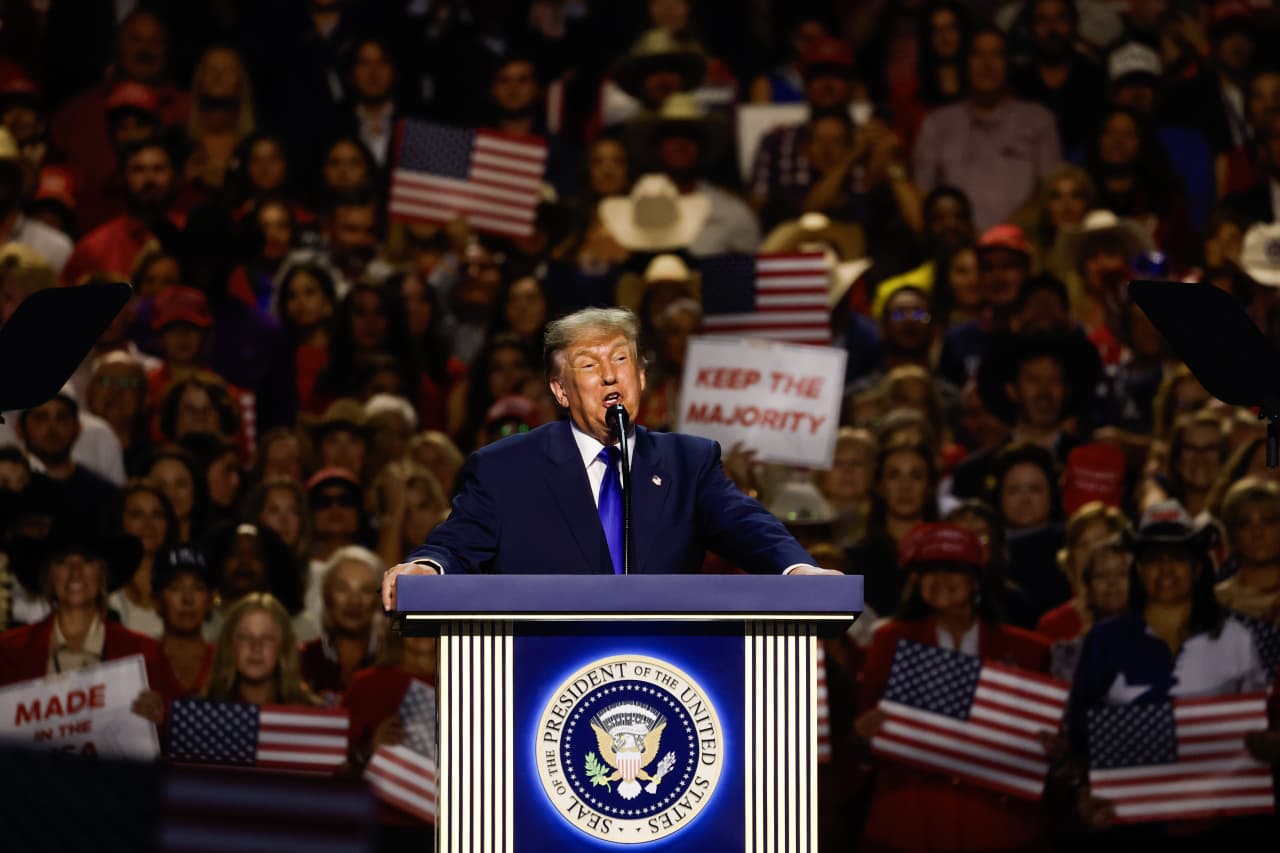
At the Republican National Committee's midterm convention in Dallas, Trump doubled down on a consumer-facing fiscal pledge: $5,000 direct payments contingent on GOP electoral success in November. The commitment arrives amid consensus analyst expectations of Republican losses driven by persistent inflationary pressures constraining household purchasing power and dampening incumbent-party support.
The pledge mirrors Trump's established pattern of pre-election economic commitments that have proven difficult to operationalize. His prior advocacy for tariff regimes and DOGE (Department of Government Efficiency) 'dividends'—both touted as wealth-generative—failed to translate into measurable household benefit. The former hinges on consumer-price dynamics that often prove contractionary; the latter lacked any credible fiscal anchor or implementation mechanism. Against this backdrop, the $5,000 rebate promise invites scrutiny regarding both political feasibility within a divided legislative environment and the mechanisms by which such transfers would be funded and distributed.